Selling all kinds of polyethylene irrigation pipes at the best price of the day becomes more important when buyers are looking for a high-quality, durable product that fits the needs of their project. Choosing the right pipe is not only limited to the initial cost; But factors such as the quality of raw materials, working pressure, pipe diameter, wall thickness and production standards should also be considered.
In the meantime, Lisa Pipe, focusing on supplying and supplying all kinds of polyethylene pipes, can be an option to consider for farmers, contractors, irrigation project operators, and activists in the field of facilities. The purpose of choosing a suitable supplier is to obtain a product that fits the needs of the project and balance between quality, durability and implementation costs.
What is polyethylene irrigation pipe and what is its use?
Polyethylene irrigation pipe is a type of pipe made of polyethylene polymer material, which is used to transport water in irrigation and water supply networks. These pipes are used in various applications according to the type of raw materials, production method, diameter and technical specifications.
One of the most important features of these products is proper resistance to moisture and rust. Unlike some metal pipes, polyethylene pipe does not undergo metal corrosion under normal conditions of use. This feature has caused it to be considered in many agricultural, horticultural and water supply projects.
Buyers should first determine the type of application when considering the sale options of polyethylene irrigation pipes. A pipe used to transport water in a small garden is not necessarily suitable for an extensive agricultural network or pressurized irrigation system. Product selection should be based on the actual conditions of the project.
Why is polyethylene pipe suitable for irrigation systems?
Resistance to moisture and environmental conditions
Polyethylene pipes have good resistance to moisture and many corrosive agents in the environment due to their polymer structure. This feature is very important for networks that are buried in the ground or that are constantly in contact with water.
Flexibility and ease of installation
The proper flexibility of the polyethylene pipe makes it easier to implement different paths in agricultural land. In many projects, the ability to pass the pipe through curved paths or limited changes in the ground surface is considered a practical advantage.
Also, the relatively low weight of these tubes can make their moving and emptying easier. This issue becomes more important in projects that require a large volume of pipes.
Reduce maintenance costs
A suitable irrigation network should have acceptable maintenance costs in addition to proper operation. The use of high-quality pipes, compatible connections, and design according to the working pressure can reduce the possibility of leakage, failure, and stoppage of irrigation.
Of course, no product can guarantee its optimal performance in the long term regardless of usage conditions, correct installation and basic maintenance. Therefore, when buying irrigation polyethylene pipe, the quality of the product must be checked along with the conditions of network implementation.
Types of irrigation polyethylene pipes
Drip irrigation polyethylene pipe
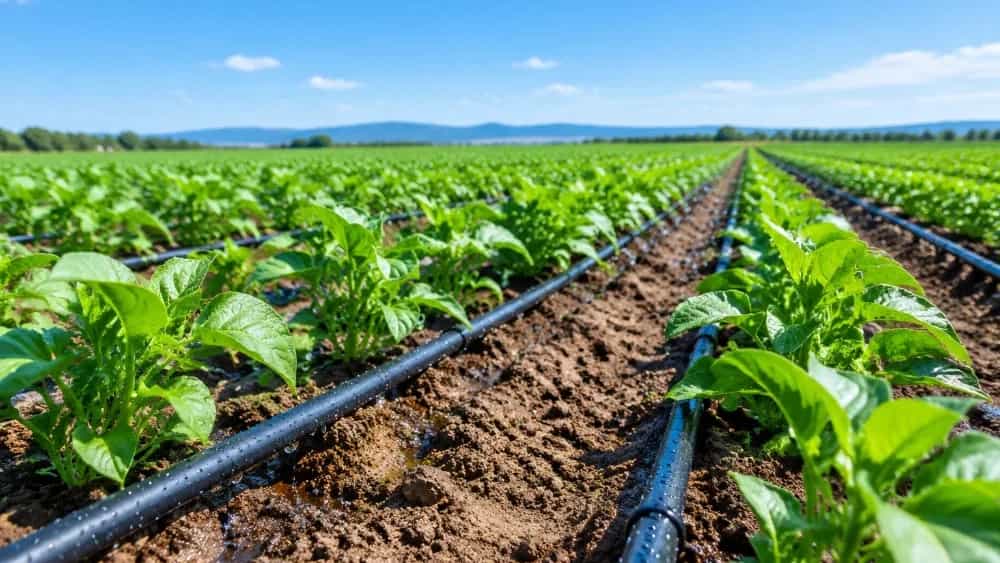
In the drip irrigation system, the main goal is to bring water close to the plant roots and reduce its wastage. The pipes used in this system must be compatible with the irrigation equipment, drippers and selected connections.
In choosing a drip irrigation pipe, factors such as internal diameter, working pressure, path length, required flow rate and water distribution method are important. The fundamental design of the network can help distribute water more evenly and use the available resources more effectively.
Lisa Pipe can be considered as one of the considered options for supplying the pipes needed for these types of projects. Before choosing the product, it is better for buyers to match their required technical specifications with the characteristics of the desired pipe.
Rain irrigation polyethylene pipe
In rain irrigation systems, water is transferred to the sprinklers through the piping network. In this situation, the pipe should be selected according to the required pressure of the equipment and the designed flow rate.
Using a pipe that is not proportional to the working pressure can disrupt the performance of the system and increase the possibility of leakage or damage. For this reason, it is important to check the technical specifications and choose the right pipe for the main and secondary lines.
Polyethylene pipe for transporting agricultural water
In many farms and gardens, it is necessary to transport water from a storage source, well, pumping station or transfer channel to different parts of the land. Polyethylene pipes with appropriate technical specifications can be used in these networks.
Choosing the water transfer pipe should be done based on system pressure, route length, amount of water required and installation conditions. In long routes, pressure drop calculation is also important; Because the inappropriate diameter of the pipe may increase the pressure drop and pump energy consumption.
Polyethylene pipe used in greenhouses
Greenhouses need a reliable irrigation network to provide the plants with the moisture they need. Polyethylene pipes can be used in the main and secondary water supply lines of greenhouses; Provided that their specifications are compatible with the system design.
In these environments, the uniformity of water distribution, the possibility of irrigation control, ease of repair and compatibility with connections are particularly important. Choosing the right pipe can make irrigation management easier and prevent disruption to the plant maintenance program.
Light and heavy polyethylene pipe
The market terms light and heavy pipe may be used to describe different product features. Therefore, it is better for the buyer not to make a decision only based on these titles and check the detailed technical specifications of the product.
Density of raw materials, polyethylene grade, diameter, wall thickness, pressure category and production standard are among the things that are important in pipe evaluation. For the correct choice, the specifications included in the technical documentation of the product should be considered.
The most important factors influencing the choice of irrigation polyethylene pipe
Pipe diameter and water flow rate
The diameter of the pipe is one of the main factors in the design of the water supply network. The diameter should be chosen according to the volume of water required, the length of the path, the available pressure and the number of outlets.
If the diameter of the pipe is less than the required value, the pressure drop can increase and the performance of different parts of the network will be affected. On the other hand, selecting more diameter than required may also increase implementation costs. For this reason, engineering calculation and checking the project conditions is very important.
Working pressure and wall thickness
Each pipe is designed for a specific range of pressure and operating conditions. When buying an irrigation polyethylene pipe, it is necessary to check the working pressure of the network and its possible changes.
The thickness of the wall, the type of raw materials and the dimensions of the pipe play a role in the pressure tolerance. Product selection should be done considering pump pressure, static pressure, possibility of sudden pressure increase and design requirements.
Quality of raw materials
The quality of raw materials affects the mechanical properties and performance of the pipe. Suitable raw materials and controlled production process can help produce a uniform and durable product.
To evaluate the quality, it is better to check technical specifications, manufacturer information, compliance with relevant standards and quality control documents. The proper appearance of the pipe alone cannot prove the quality of raw materials or its ability to withstand pressure.
Production standards
Professional buyers should check the dimensions, tolerances, pressure category and quality requirements of the product before placing an order. This work helps to reduce the possibility of incorrect selection and increase the confidence in the implementation of the project.
Selling all kinds of irrigation polyethylene pipes at the best price of the day
When searching for the sale of polyethylene irrigation pipes at the best price of the day, many buyers are looking for a supplier who can correctly identify the needs of the project and provide them with the appropriate product.
However, the best choice is not necessarily the cheapest product available. The final cost of an irrigation network depends on several factors such as pipe quality, required volume, type of connections, transportation conditions, installation difficulty, and maintenance costs. Therefore, instead of focusing only on the initial cost, it is better to examine the overall value of the product and its performance over time.
In the introduction and supply of irrigation polyethylene pipes, Lisa Pipe can emphasize the importance of conscious selection, checking technical specifications and matching the product with the buyer's needs. This approach is very important for customers who intend to implement a new network or develop the existing irrigation system.
To achieve the right choice, it is recommended to determine the project type, required diameter, working pressure, water consumption and installation conditions before preparing the product. Then the available products are evaluated based on these criteria so that the final choice is made based on the actual need.
Why buying from Lisa Pipe can be a good choice?
Choosing the right supplier is an important part of the irrigation equipment procurement process. In addition to the product specifications, the buyer pays attention to the transparency of the information, the possibility of checking the technical features and the compatibility of the supplied products with the needs of the project.
Lisa Pipe, focusing on the field of pipes and equipment related to water supply, can be included in the list of buyers' review options. When choosing the products of this collection, it is better to carefully check the information about the type of pipe, proposed application, dimensional specifications, working pressure and production standard.
Attention to the real needs of the customer
Each irrigation project has its own conditions. The area of the land, the type of cultivation, the water source, the distance between different parts of the network and the irrigation method are all effective in choosing the right pipe.
A professional choice should be made based on these circumstances, not just on the basis of a specific model or general recommendation. Lisa Pipe can be considered as one of the supply sources in the process of reviewing the available options, so that the buyer can choose the product that fits his plan.
The importance of providing clear technical information
Detailed product information helps the buyer to better distinguish between different models. The inclusion of clear technical specifications, including diameter, wall thickness, nominal pressure and type of raw material, makes the selection process easier.
At the time of checking Lisa Pipe products, paying attention to this information is a good way to evaluate the suitability of the pipe with the project's needs. The more complete the technical information, the greater the possibility of comparing products and reducing ordering errors.
Attention to durability and long-term performance
In agricultural projects, the failure of the water supply network can disrupt the irrigation program and cause additional costs. For this reason, the durability and technical suitability of the pipe should be considered along with the initial cost.
Purchasing a product suitable for operating conditions, following installation principles and using compatible connections are effective factors in increasing network reliability. This issue is especially important for customers who intend to use the irrigation system for a long time.
Guide to buying irrigation polyethylene pipe for garden and farm
Before preparing the pipe, it is better to go through a few specific steps to reduce the possibility of making a wrong choice.
Determining the irrigation method
First, it should be determined that irrigation is done by drip, rain, surface or combined method. Each method requires different equipment and hydraulic conditions, and the choice of pipe must be coordinated with the design of the same system.
Calculate the length of the route and the amount of water needed
The length of the piping route and the required volume of water are effective in choosing the diameter and characteristics of the network. In large projects, it is also necessary to calculate the pressure drop and check the pump performance.
Checking the installation conditions
A pipe installed outdoors may face different conditions than a pipe buried in the ground. Sunlight, temperature changes, the movement of agricultural machinery and the possibility of mechanical damage should be considered in the design and selection of equipment.
Choose compatible connectors
Improper connections can affect the performance of the entire network. The type of connection must be compatible with the material, diameter and characteristics of the pipe. Also, correct installation and compliance with the manufacturer's instructions play an important role in preventing leaks.
Check supply and delivery conditions
Before finalizing the order, it is better to check the product inventory, detailed specifications, required quantity and delivery conditions. This helps to plan the project better and reduce the possibility of delays in implementation.
The role of polyethylene pipe in water consumption management
The scarcity of water resources and the increasing importance of sustainable agriculture have increased the necessity of using efficient irrigation systems. Polyethylene pipe, as one of the components of the water transmission and distribution network, can play a role in the implementation of irrigation systems according to the needs of plants.
However, just using polyethylene pipe does not mean a definite reduction in water consumption. The amount of savings depends on network design, irrigation method selection, pressure control, irrigation time management and proper equipment maintenance.
For example, in a properly designed drip irrigation system, targeted water transfer to the root zone can help reduce some losses. Suitable pipes in such a system should have the ability to provide the required flow and be compatible with other components of the network.
Buyers of Lisa Pipe products should pay attention to the overall performance of the irrigation system when choosing a pipe. Correct selection of equipment, along with basic design and proper operation, can provide a more effective use of water resources.
Proper maintenance of irrigation polyethylene pipes
At the time of installation, it is also important to follow the instructions related to bed preparation, pipe connection, proper burial and protection against possible damages. In networks under pressure, performing the necessary tests before operation can help identify possible problems.
After installation, periodically checking the connections, controlling leakage, cleaning the required equipment and monitoring the network performance, are measures that help maintain the efficiency of the system.
In areas where the ambient temperature or ground conditions have significant changes, the technical recommendations related to the same conditions should be followed. Proper maintenance, along with choosing the right product, helps to increase the reliability of the irrigation network.
Purchase of irrigation polyethylene pipe from Lisa Pipe; An informed choice for agricultural projects
To implement a reliable irrigation network, pipe selection should be done by checking the quality, technical specifications, irrigation method and environmental conditions at the same time. The right pipe can play a role in the sustainable transfer of water and help to reduce the problems caused by the incorrect selection of equipment.
Lisa Pipe, as a reliable name in the field of providing polyethylene pipes, can attract the attention of farmers, gardeners, greenhouses and water supply project managers. Knowing the features of the products and comparing the technical specifications will help the buyers to make a decision that suits their needs.
If your goal is to provide pipes for a small garden, large farmland, greenhouse or water transmission network, it is best to determine the needs of the project first. Then check the diameter, working pressure, type of pipe, quality of raw materials and compatibility of connections so that the selected product is technically and operationally suitable.
Searching for the sale of polyethylene irrigation pipes at the best price of the day will have a more favorable result when, in addition to paying attention to the supply conditions, the quality and durability of the product are also prioritized. The conscious choice of Lisa Pipe can be part of the planning process for providing irrigation equipment; A process that helps to implement the water supply network in a more principled way by carefully examining the technical specifications and choosing according to the actual needs of the project.
summary
Polyethylene irrigation pipe is one of the widely used options in agricultural water transmission and distribution networks, which is used in various projects due to its characteristics such as moisture resistance, relatively light weight, and ease of implementation. However, the optimal performance of these products depends on the correct choice of diameter, working pressure, quality of raw materials, production standard and basic installation.
In the selection and purchase process, paying attention only to the initial cost is not enough. Buyers should also consider the actual needs of the project, environmental conditions, irrigation method and maintenance costs. Lisa Pipe can be one of the considered options for providing irrigation polyethylene pipes; Provided that the specifications of the supplied products are adapted to the technical requirements of the project.
Finally, the correct selection of the pipe and the principled implementation of the network provide the basis for proper water transfer and better management of irrigation equipment. A detailed examination of Lisa Pipe products and selection based on technical information can help buyers make a more informed decision for their agricultural and irrigation needs.